Last Sunday, 7 December, local government elections were held in three Russian regions. Deputies were elected to 16 representative bodies of a municipal formation, along with the heads of three municipalities.
Republic of Tatarstan: elections without United Russia
In September, the Republic saw local elections for numerous representative bodies of municipal self-government. Competition was extremely low: only 11,400 candidates stood for 7,500 seats — an average of 1.5 people per deputy’s seat. Most of those elections went ahead nonetheless, since they were held primarily in single-mandate electoral districts, where only one registered candidate is sufficient.
Some of the elections were nevertheless postponed. This past Sunday, 12 campaigns that had been pushed back to a later date were held in the region. Two more were repeat votes, resulting from the “against” line defeating the sole registered candidate.
A distinctive feature of each of these was the complete absence of United Russia representatives. Yet such a practice is hardly new for the party in the region. For instance, in the 2020 elections to the Kazan City Duma it left nine out of 25 single-mandate districts without its candidates, and this year the situation almost repeated itself — seven districts ended up at the disposal of opponents.
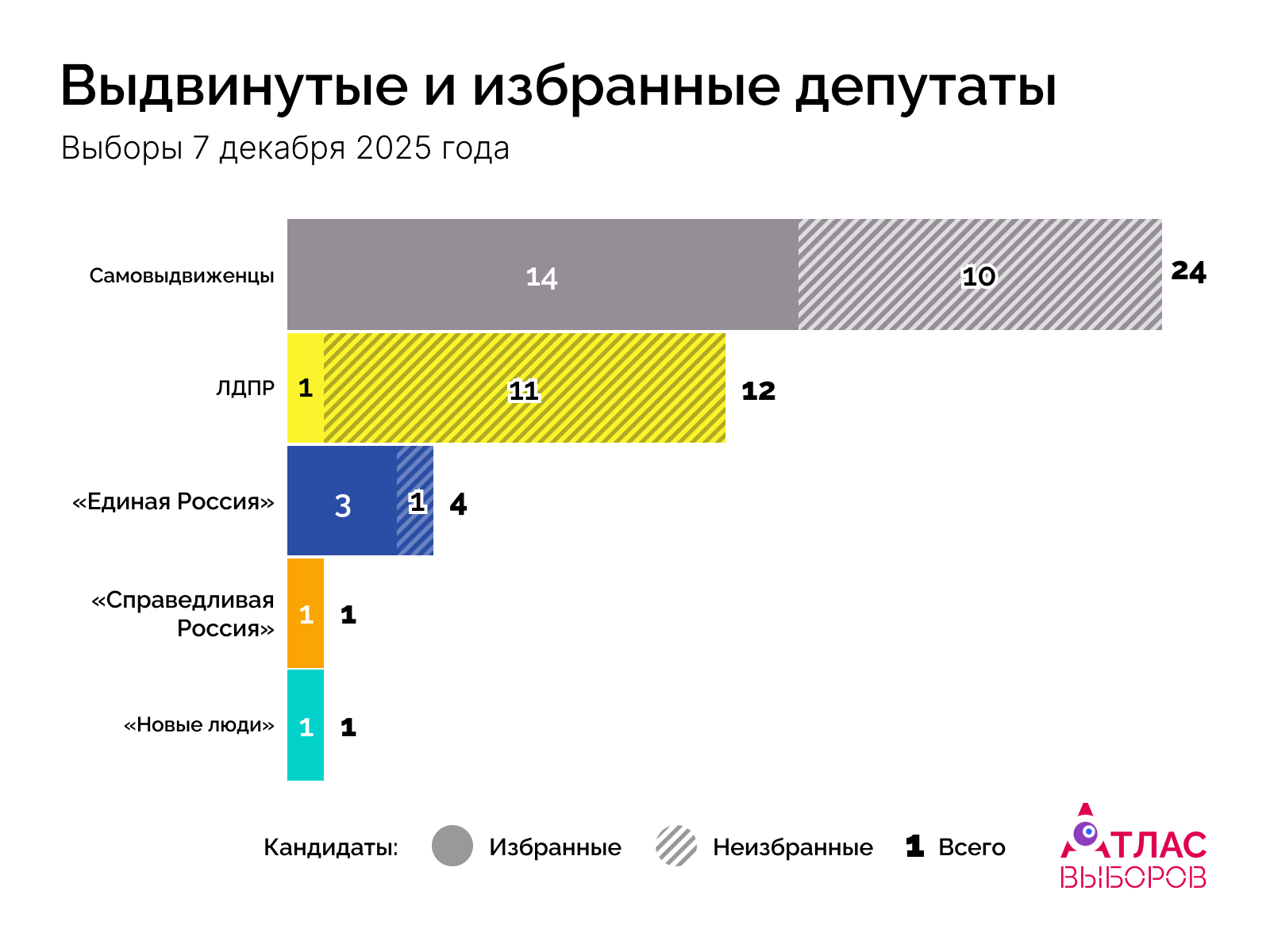
A total of 14 deputy seats were to be filled in the region. Thirty-three candidates were registered: 12 from the LDPR, one from the New People party, and 20 independent candidates.
Based on the voting results, one seat each went to the LDPR and New People, with the remaining 12 seats going to independent candidates.
Krasnodar Krai: United Russia and the supporting cast
The region saw early elections for the heads of three rural settlements — Glebovskoye, Suvorovskoye and Bratskoye. In addition, a delayed vote was held for the election of a deputy to the council of the Tuapse Municipal District. Let us begin with that.
On 29 August, on the eve of the single voting day, three participants dropped out of the race for the deputy’s seat at once — Anna Arakelyan from United Russia and independent candidates Aleksandr Venertsev and Veronika Temlyakova. Only A Just Russia representative Nikolai Zhogalev remained registered. The party published a special statement on the matter, accusing the authorities of deliberately disrupting the vote.
All three of the aforementioned contenders also withdrew from the election race ahead of the 7 December vote. This time, however, along with Nikolai Zhogalev, two more candidates were nominated and registered — independent candidates Anna Mikitina and Karlen Tikhonov. Anna Mikitina was born in Luhansk Oblast and lists the region as her place of permanent residence. Sochi resident Karlen Tikhonov is a member of the United Russia party, took part in the special military operation, and completed the “Time of Heroes” programme.
Based on the voting results, A Just Russia candidate Nikolai Zhogalev scored a confident victory.
The election for the head of Glebovskoye rural settlement in Kushchyovsky District was called following the resignation of Aleksandr Dudko on the motion of the prosecutor’s office. It is known that his powers were terminated by the settlement council on 28 July due to violations of anti-corruption legislation. The post of village head was now contested by acting head Elena Gurushkina (United Russia), as well as independent candidates — an administration staff member and the director of a cultural centre.
The head of Bratskoye rural settlement in Tikhoretsky District, reserve Russian FSB lieutenant colonel Ruslan Toliko, left as a volunteer for the special military operation in November 2024 and signed a new contract in the summer. Acting village head Nikita Pereverzev (United Russia) contested the election; his competitors were staff members of the local club, who stood as independent candidates.
The reasons for the early termination of powers of the head of Suvorovskoye rural settlement in Ust-Labinsk District are unknown: the decision of the council of deputies has not been published. Krasnodar journalist Andrei Koshik writes that the previous head, Islam Shagundokov, resigned. Here too the main contender for the post of village head was acting head Aleksandr Antonets (United Russia). His competitors are, almost traditionally, the director of a municipal institution and a staff member of a cultural centre.
As you might have guessed, based on the voting results all the posts went to United Russia candidates — persons temporarily exercising the powers of heads: Elena Gurushkina, Aleksandr Antonets and Nikita Pereverzev.
Kamchatka Krai: deputy elections in a village reachable once every two weeks
In the village of Slautnoye in Penzhinsky District, five of the seven deputies on the local council resigned their powers early.
This is not the first time. In 2015, for example, the prosecutor’s office of Penzhinsky District filed a lawsuit against the local council of deputies. The representative body was then deemed incapable of functioning, as the majority of deputies had long since scattered in all directions. The next mass exodus of people’s elected representatives took place in 2018.
It is worth noting that the village itself lies 1,620 kilometres from the regional capital, Petropavlovsk-Kamchatsky, and can only be reached by air with several stopovers — a helicopter flies here twice a month. On the whole, the situation of difficult access to the krai’s villages can be described as distressing.
Six candidates were registered for the elections: four from United Russia and two independent candidates.
Based on the voting results, three seats went to United Russia candidates and two to independent candidates.
7 December in Russia
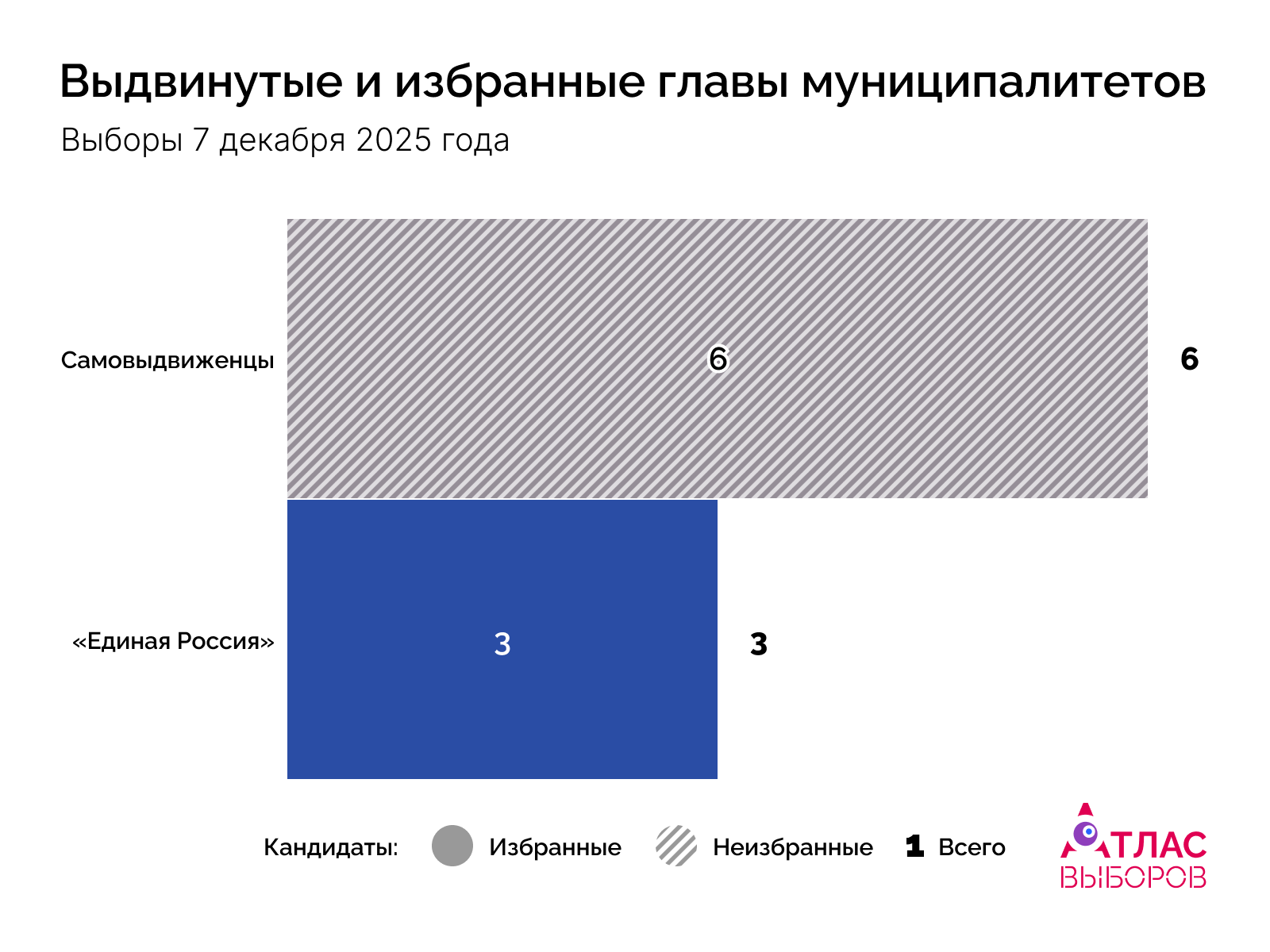
Nine candidates contested the posts of heads of three municipalities.
 Forty-two candidates contested 20 deputy seats in the representative bodies of 16 municipalities in majoritarian electoral districts.
 In total since the start of the new electoral cycle
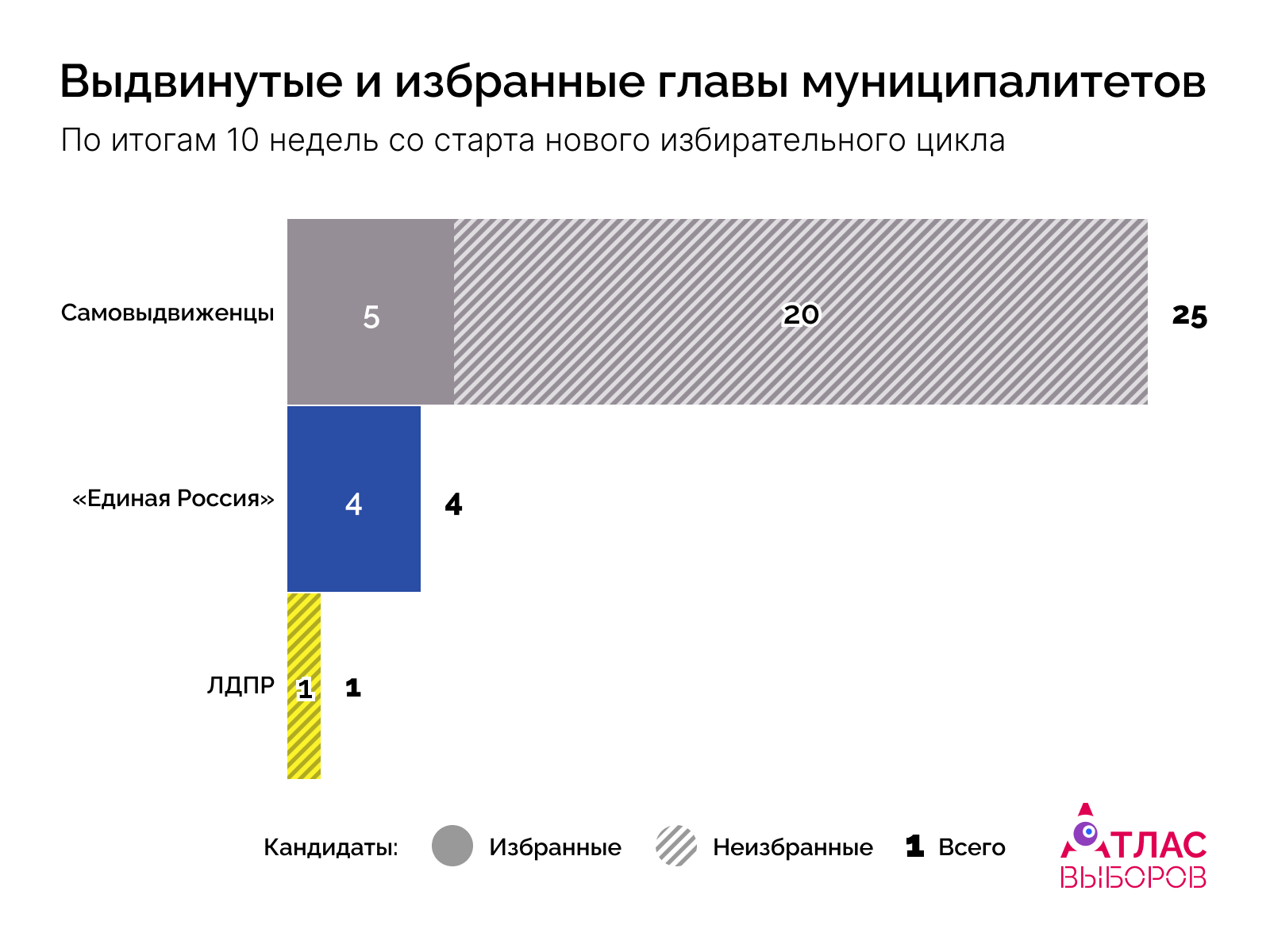
After the single voting day of 14 September 2025, ten electoral campaigns to elect municipal heads have taken place. Thirty candidates participated in them.
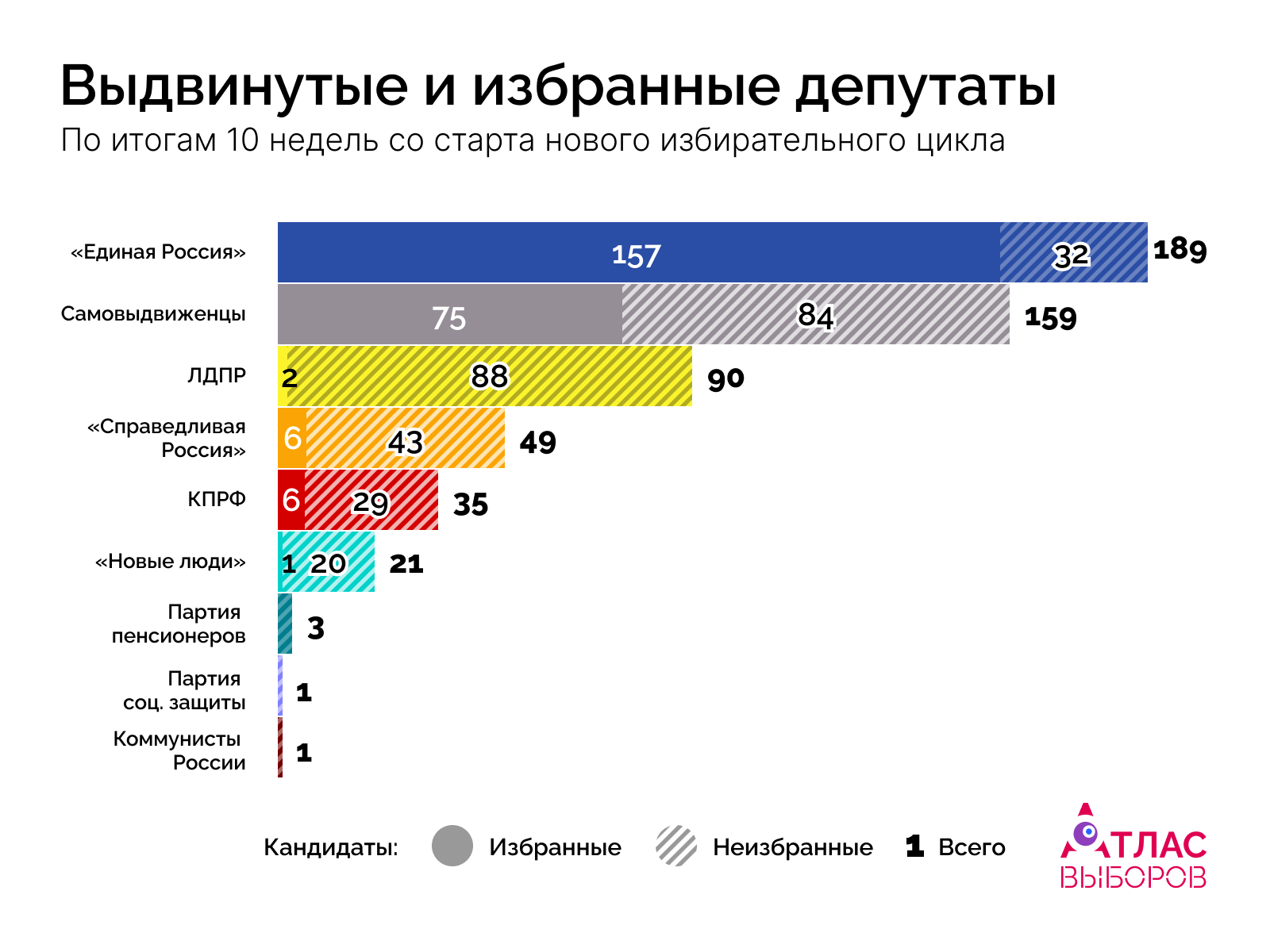
 Elections were held for deputies of 59 local representative bodies, with 247 deputy seats filled. In majoritarian districts, 548 candidates were registered.